
Materials & Technologies
The right materials for every architectural application
Material selection is critical to the durability, performance and aesthetics of every tensile structure. PVC, PTFE, ETFE and acrylic fabrics have profoundly different technical properties: understanding them allows the optimal solution to be selected for each context, climate and budget.
Comparison Table
Compare the characteristics of the main materials
| Material | Lifespan | Transparency | Weight | Reaction to fire |
|---|---|---|---|---|
| PVC/PES | 15-25 years | 5-15% | 650-1,300 g/m² | B-s2,d0 / B-s1,d0 |
| PTFE/FV | 30-50 years | 5-20% | 800-1,500 g/m² | A2-s1,d0 |
| ETFE | 30-50 years | 90-95% | 175-525 g/m² | B-s1,d0 |
PVC/PES — Polyvinyl Chloride
The most common material for tensile roofing
Coated PVC is the most versatile and widespread material in textile architecture. It offers excellent value for money, outstanding weather resistance and a wide range of finishes and colours. The substrate is typically high-tenacity polyester coated with PVC plastisol on both faces.
Technical Properties
* Varies depending on the material and the applicable standard.
Advantages
- Excellent cost-to-performance ratio
- Great design and formal versatility
- Easy to process and weld in the workshop
- Good availability in various colours and finishes
- Suitable for both temporary and semi-permanent structures
Applications
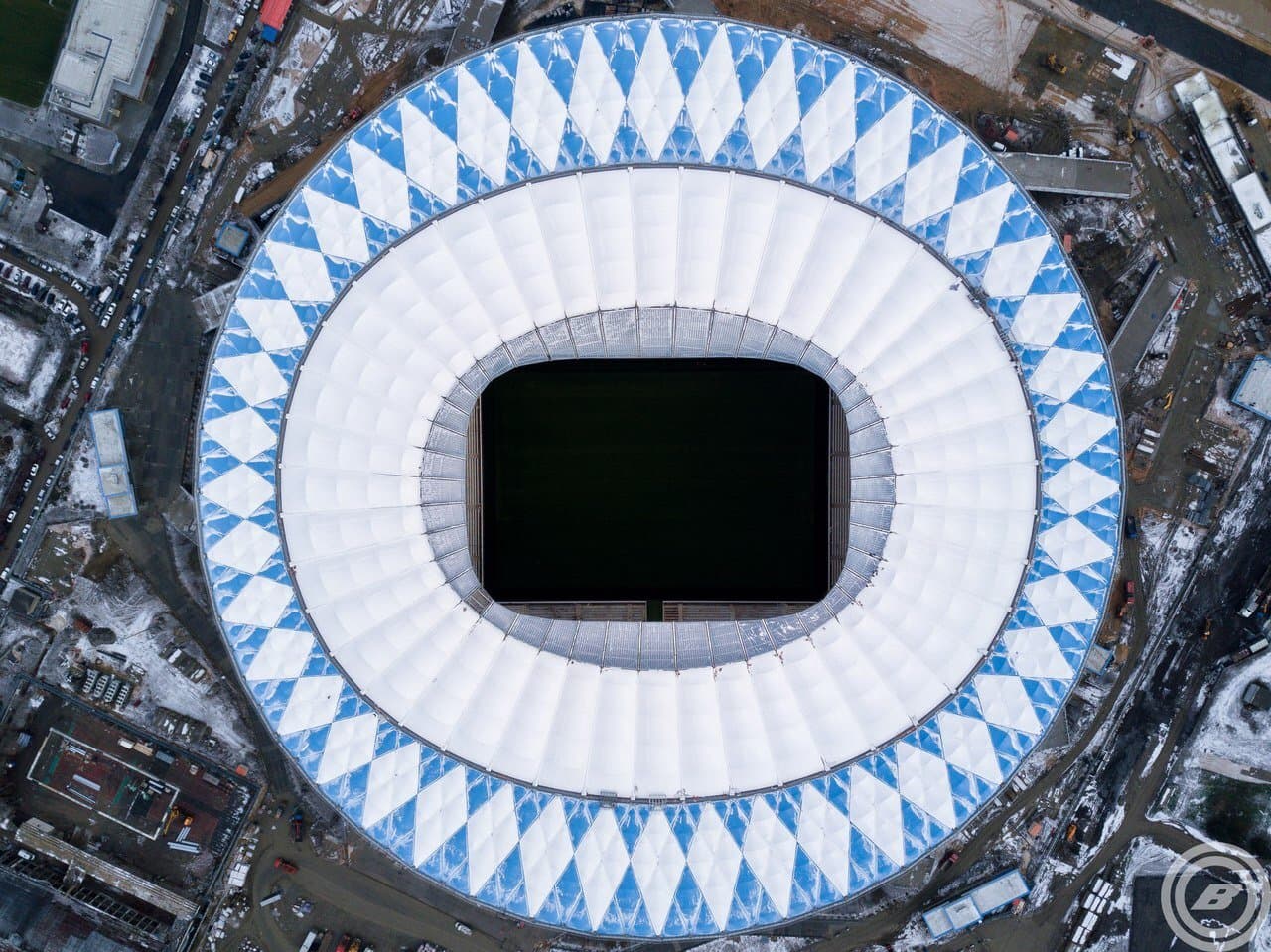
- Stadium and grandstand canopies
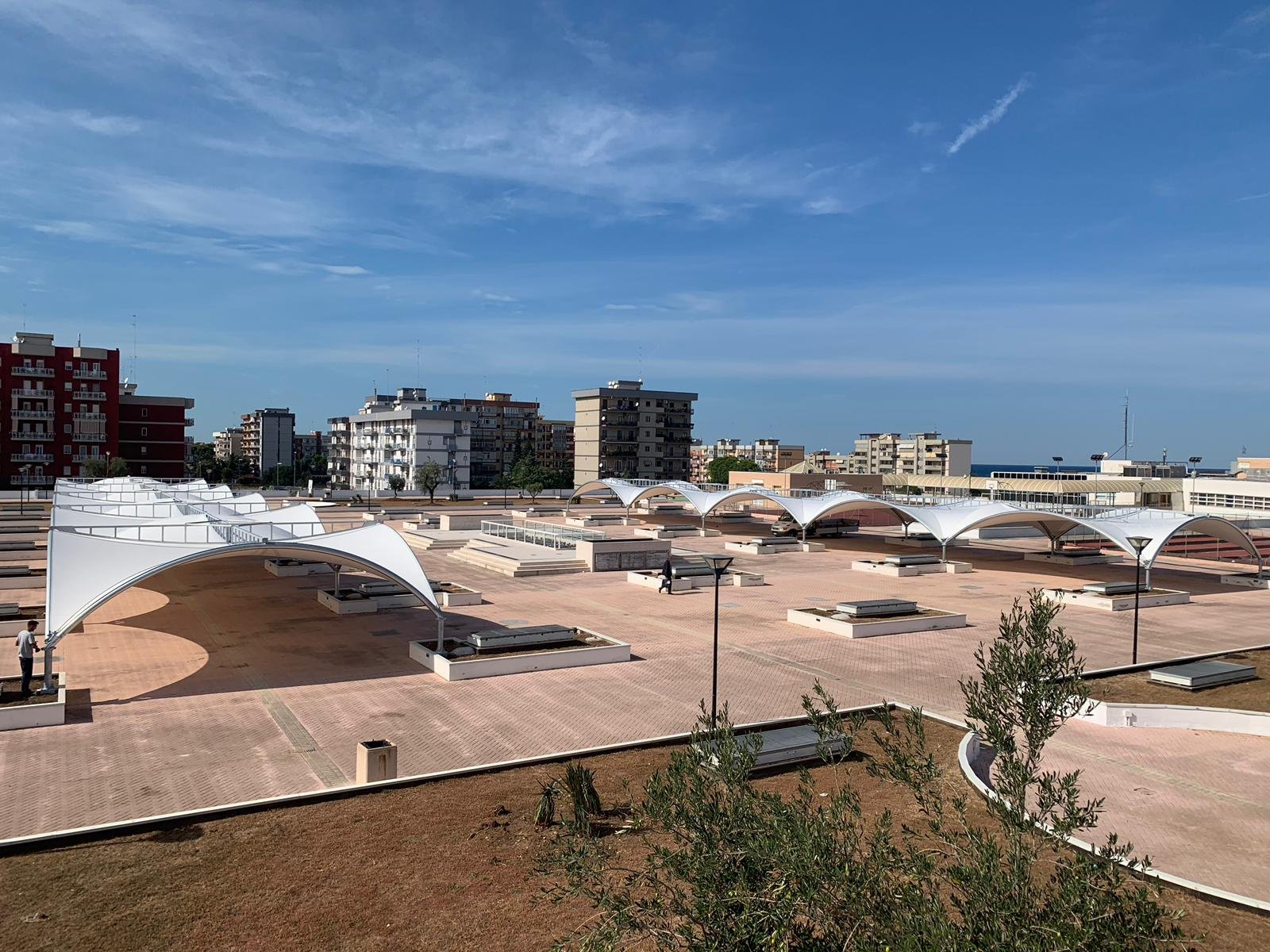
- Canopies and pergolas
- Temporary structures
- Industrial roofing
- Architectural tensile structures
PTFE/FV — Polytetrafluoroethylene
The premium choice for prestigious permanent structures
PTFE (also known as Teflon) coated on fibreglass is the excellence choice for the most prestigious permanent structures. The self-cleaning surface, very high UV resistance and lifespan of over 30 years make it ideal for airports, stadiums and convention centres.
Technical Properties
Advantages
- Very high durability (solution for permanent works)
- Excellent dimensional stability over time
- Self-cleaning surface and low maintenance
- High resistance to weathering and UV
- Top-tier fire performance (non-combustible material)
Applications
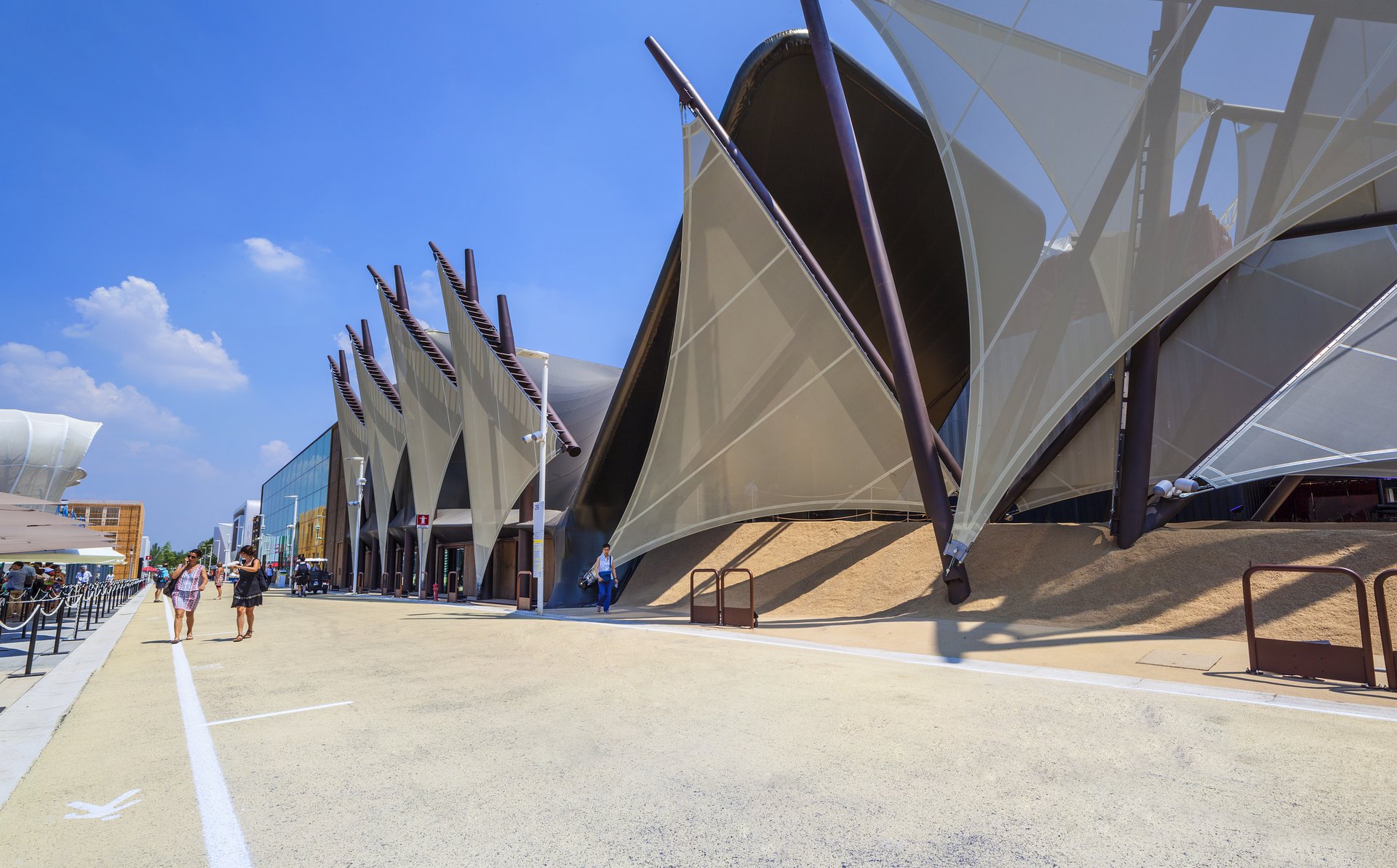
- Airports and railway stations
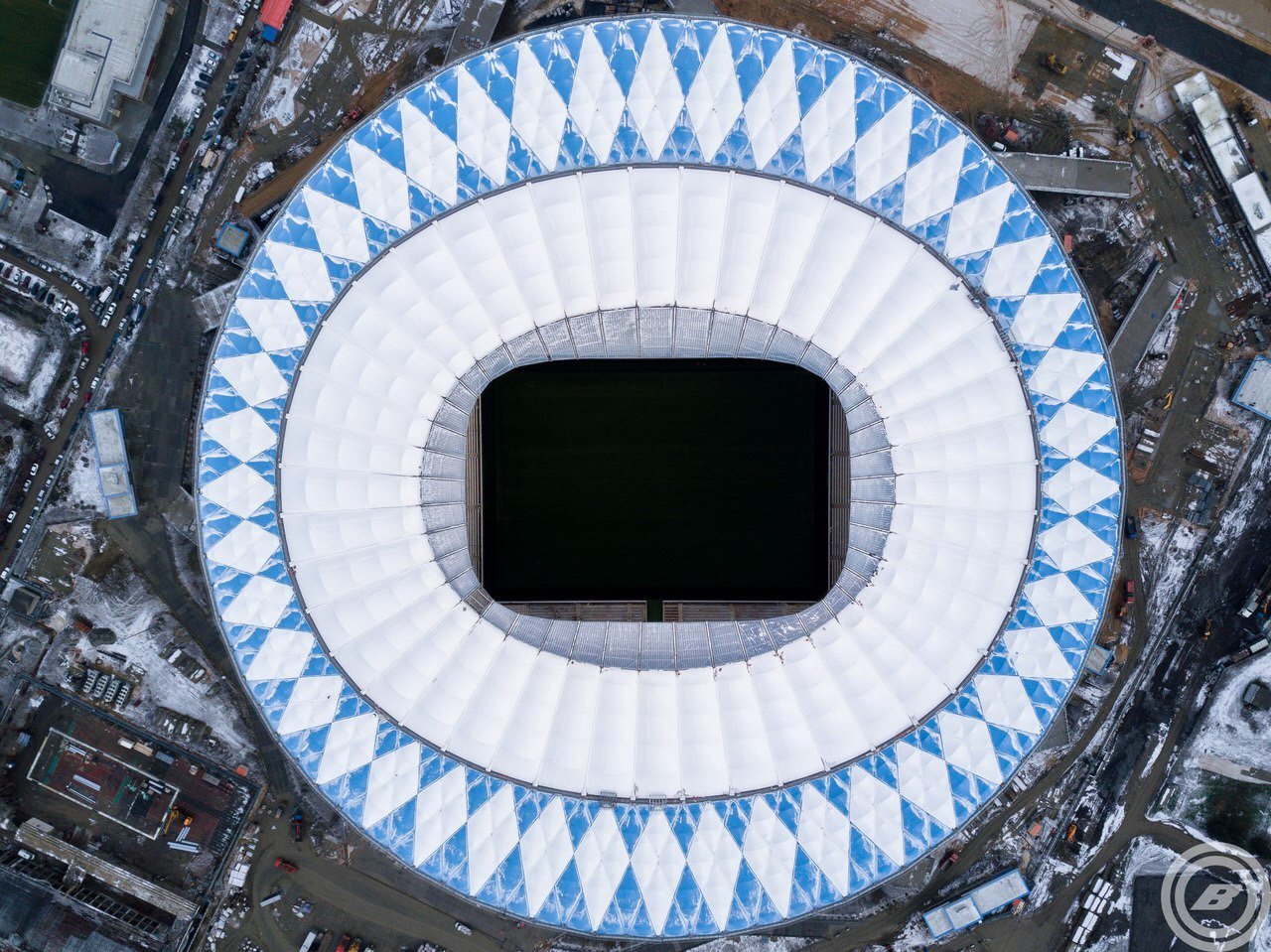
- Long-lasting stadium roofing
- Convention centres
- Prestigious public buildings
- Premium shopping centres
ETFE — Ethylene Tetrafluoroethylene
The material of the future for transparent architectures
ETFE is a next-generation fluorinated polymer that is revolutionising roofing architecture. Lightweight (1/100 of glass), highly transparent and with exceptional chemical and thermal resistance, ETFE is ideal for pneumatic cushion systems and large-span roofing.
Technical Properties
Advantages
- Extreme lightness compared to all other materials
- Very high transparency and natural light control
- Excellent resistance to weathering and UV
- Possibility of complex systems (multi-layer pneumatic cushions)
- High energy efficiency of the envelope
Applications
- Botanical gardens
- Indoor swimming pools
- Light-filled sports centres
- Shopping galleries
- Architectural facades
Contact
Let's talk about your next project.
Whether you have a concept to develop, a canopy to manufacture or a site to support, we can set up a technical discussion from the earliest stages.
Head office
Via degli Imbianchini, 7
70026 Modugno (BA)